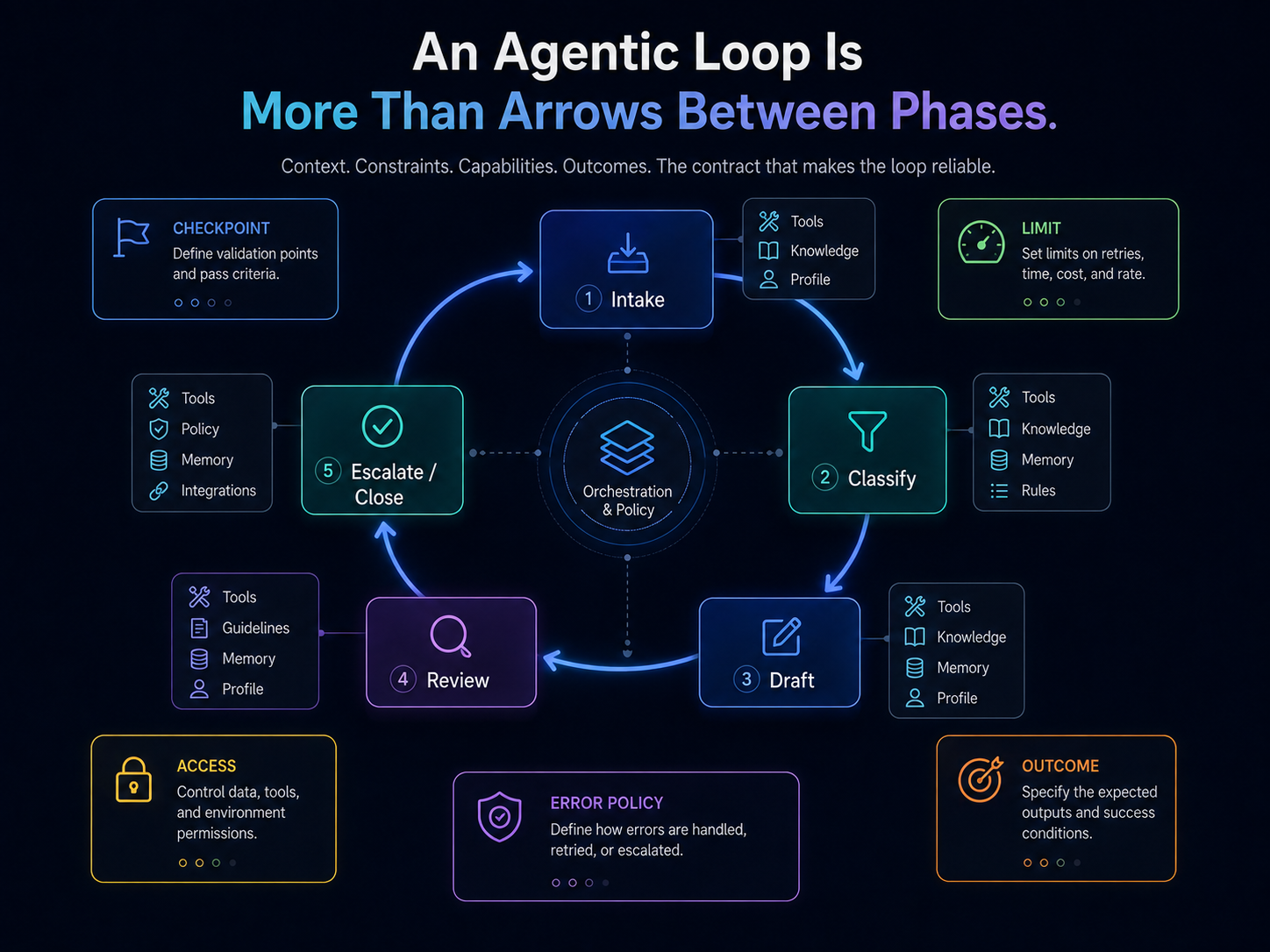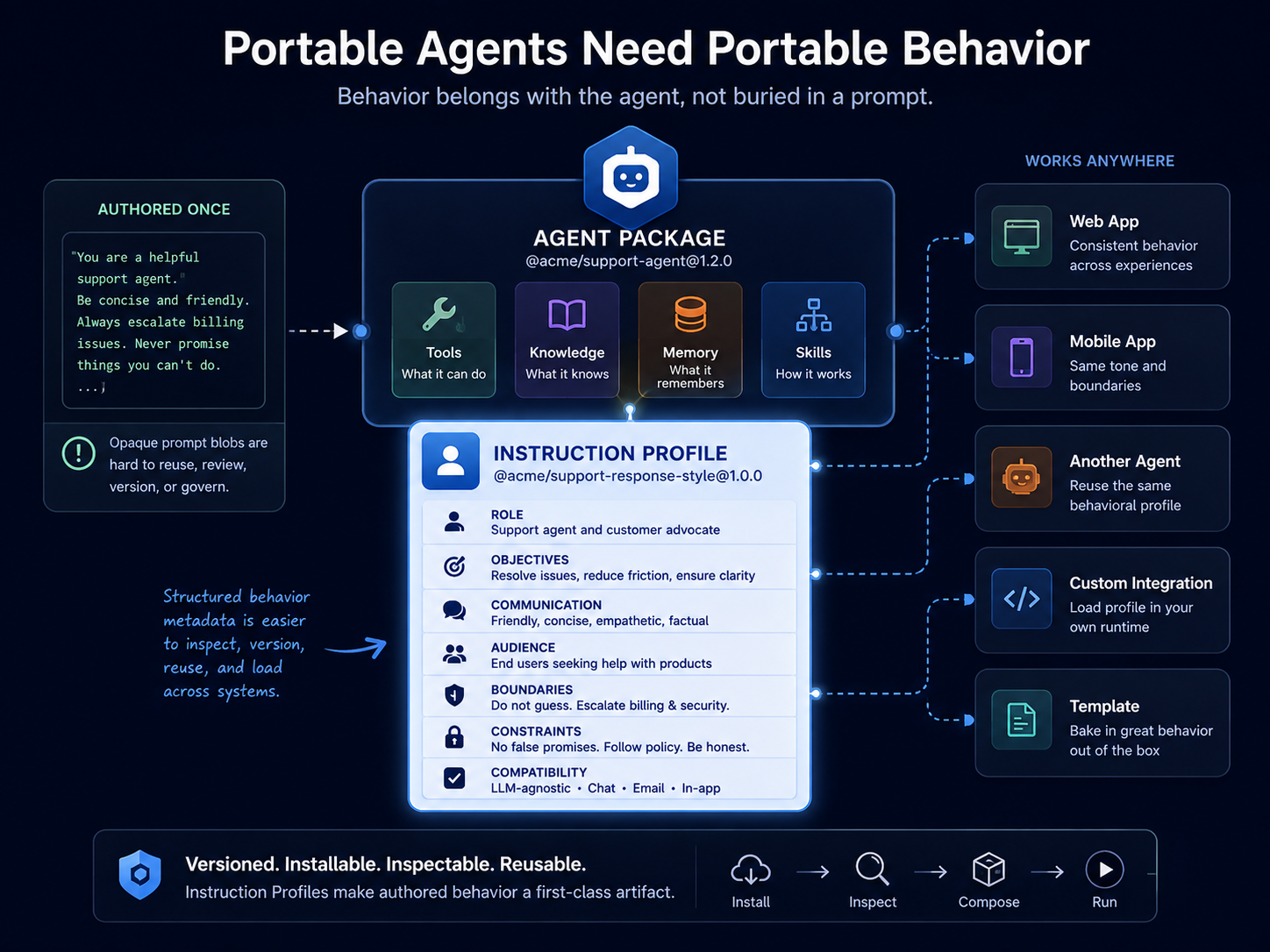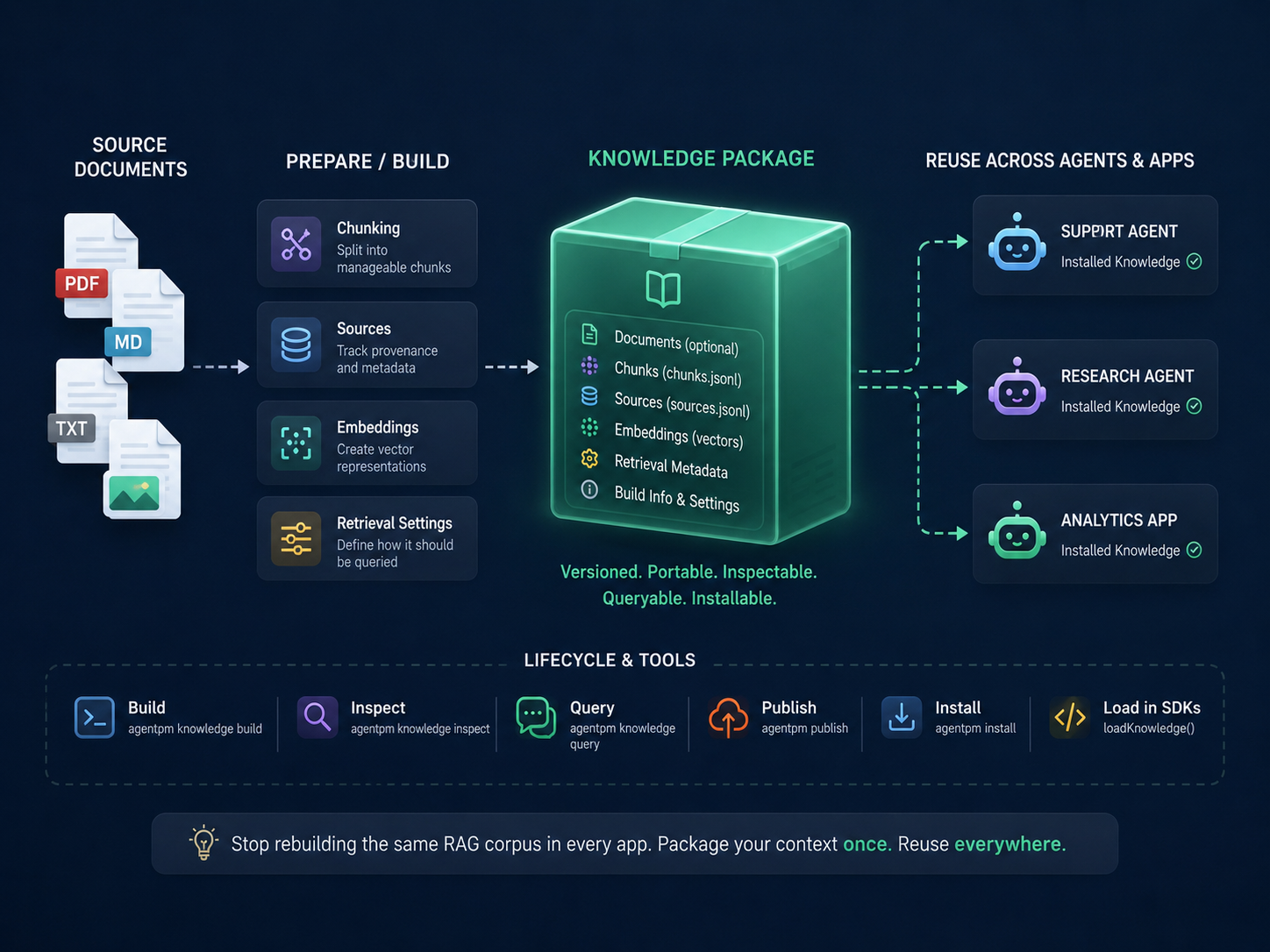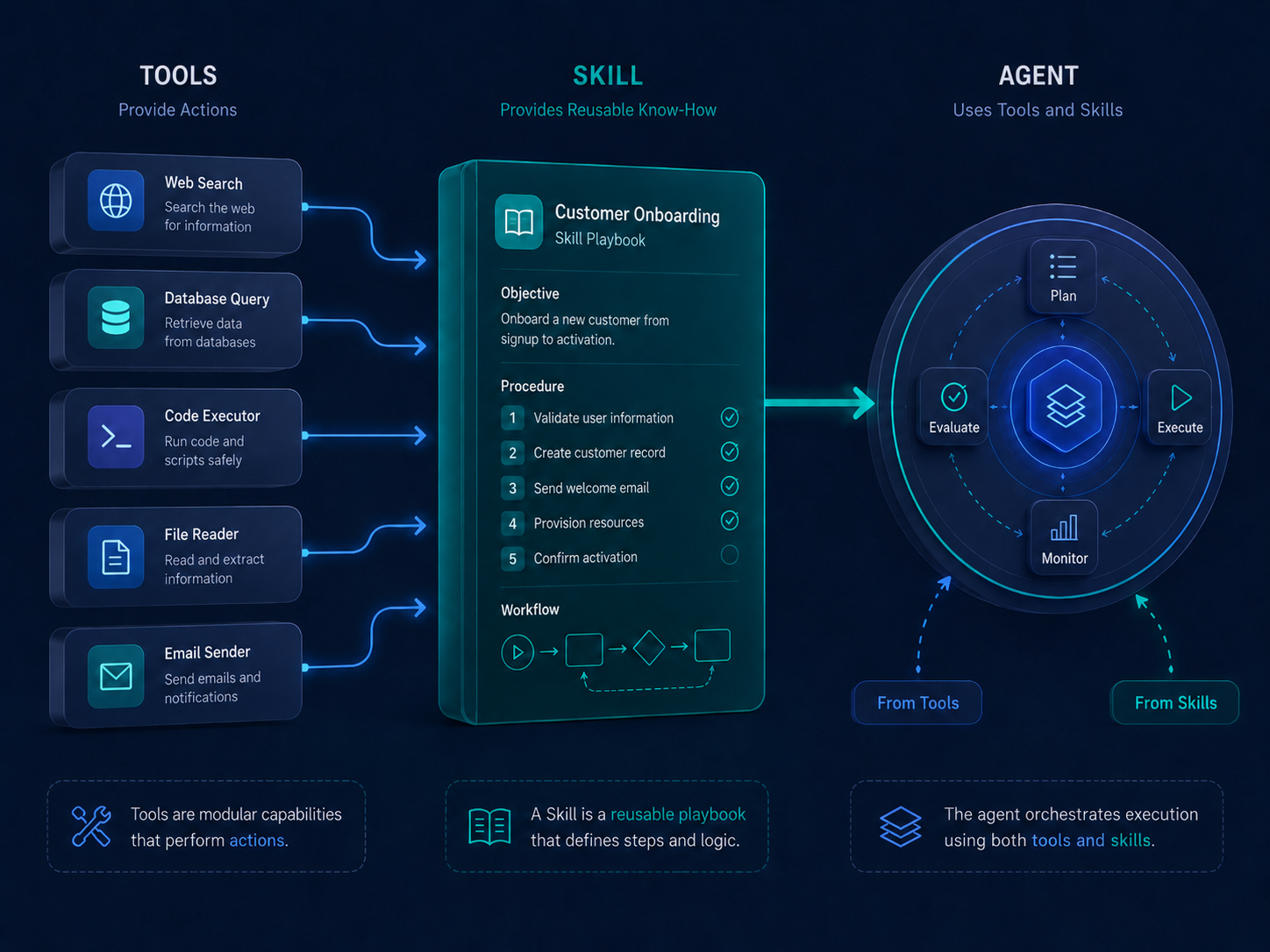
An Agentic Loop Is More Than Arrows Between Phases
A phase graph can show how work moves. It cannot explain what a loop expects.
- loops
- agent orchestration
- agent control flow
- agent bindings
- portable workflows
- react loop
- agentpm
Writing about agent systems, reusable building blocks, and the practical work of making capabilities easier to package, version, and move across runtimes, frameworks, and ecosystems.

A phase graph can show how work moves. It cannot explain what a loop expects.

A system prompt can express behavior, but it is a weak packaging boundary. Portable agents need portable behavior too.

Before memory records can move cleanly across agents, apps, runtimes, or teams, their shape has to move first.

A retrieval corpus that only works inside one app is not portable context. It is preprocessing glue with no package boundary.

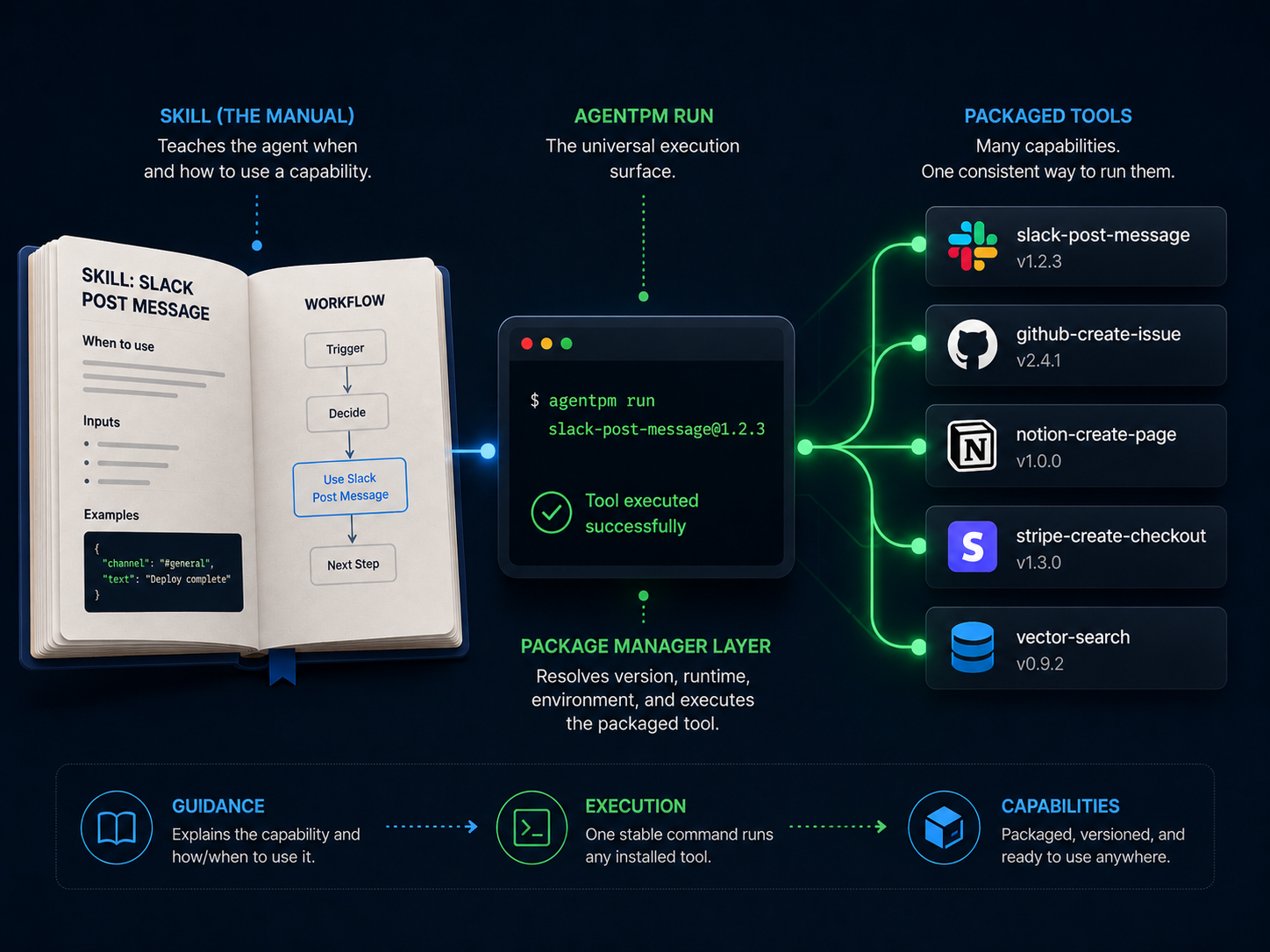
A tool can expose an action. It cannot tell an agent how to perform the work around that action. That missing layer is procedure.

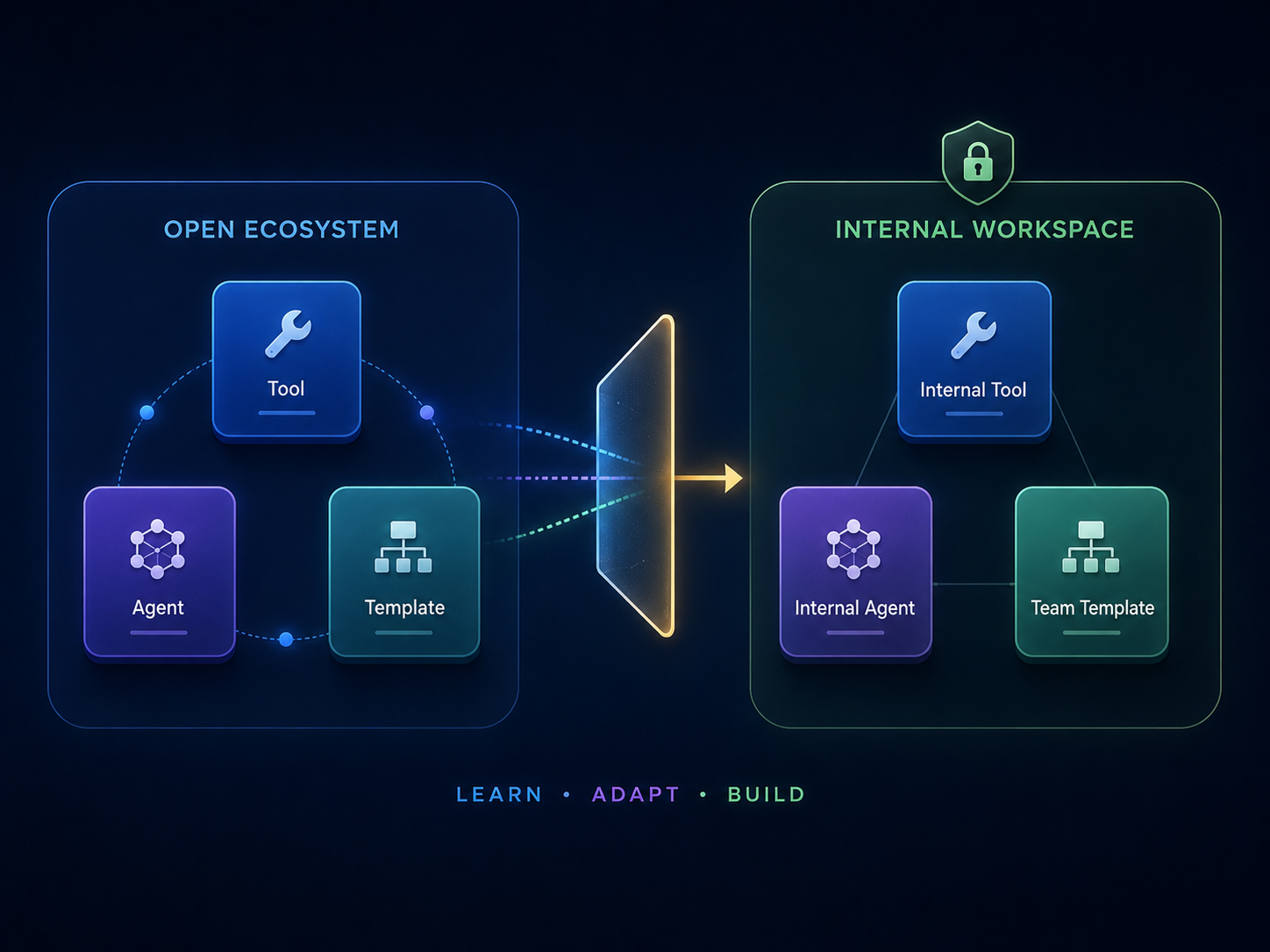
The public versus private split in agent systems is not a policy checkbox. It is the point where useful artifacts stop looking generic and start reflecting the systems, rules, and constraints of a real team.

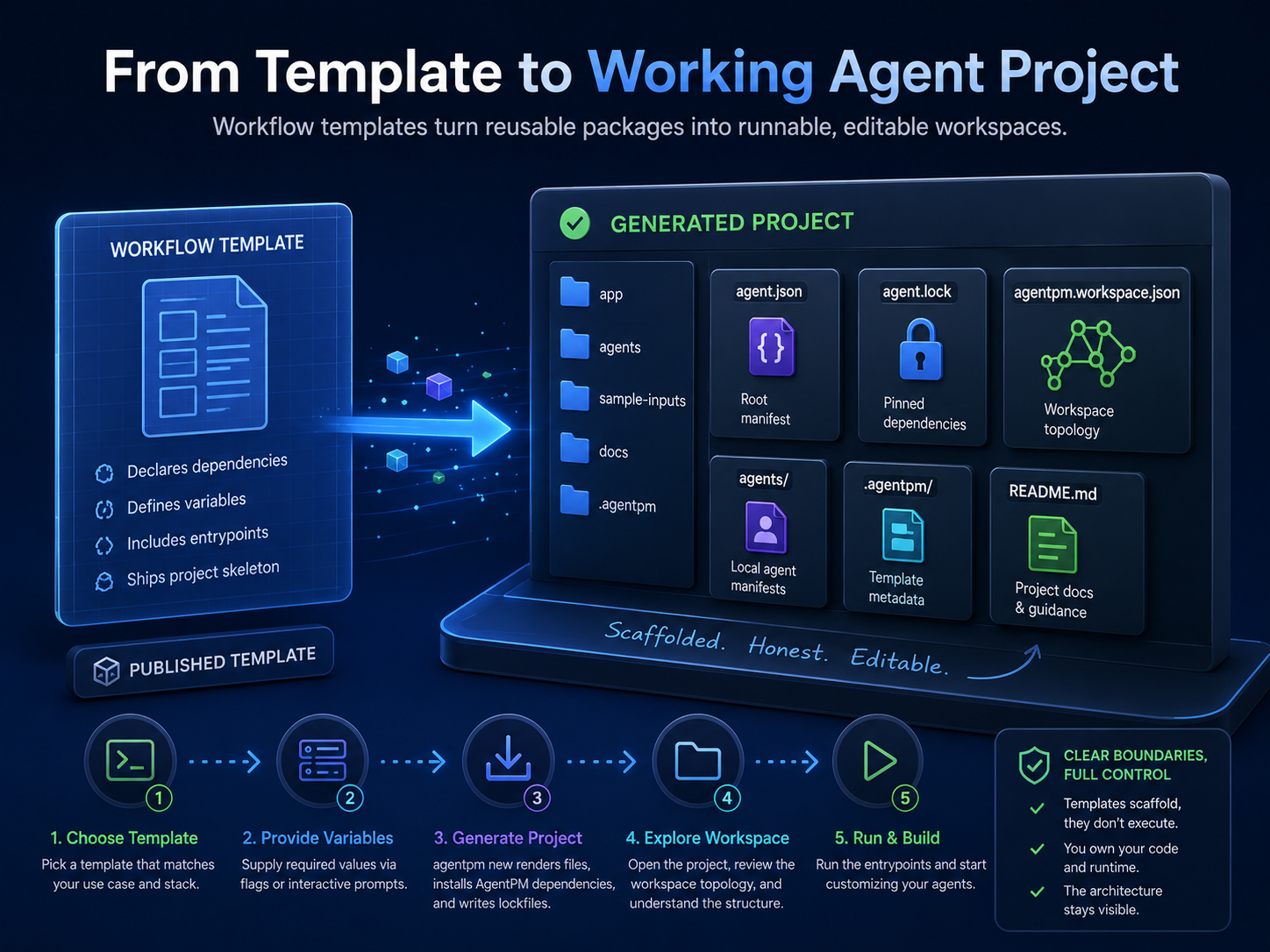
The blank page is still one of the biggest adoption bottlenecks in agent systems. Packages solve reuse. Templates solve the first-project problem.

A team builds an agent that works well internally. Another team wants to use it. That is where the packaging gap shows up.

The fifth tool in an agent system is easy. The fifteenth is noisy. The fiftieth is a design problem.

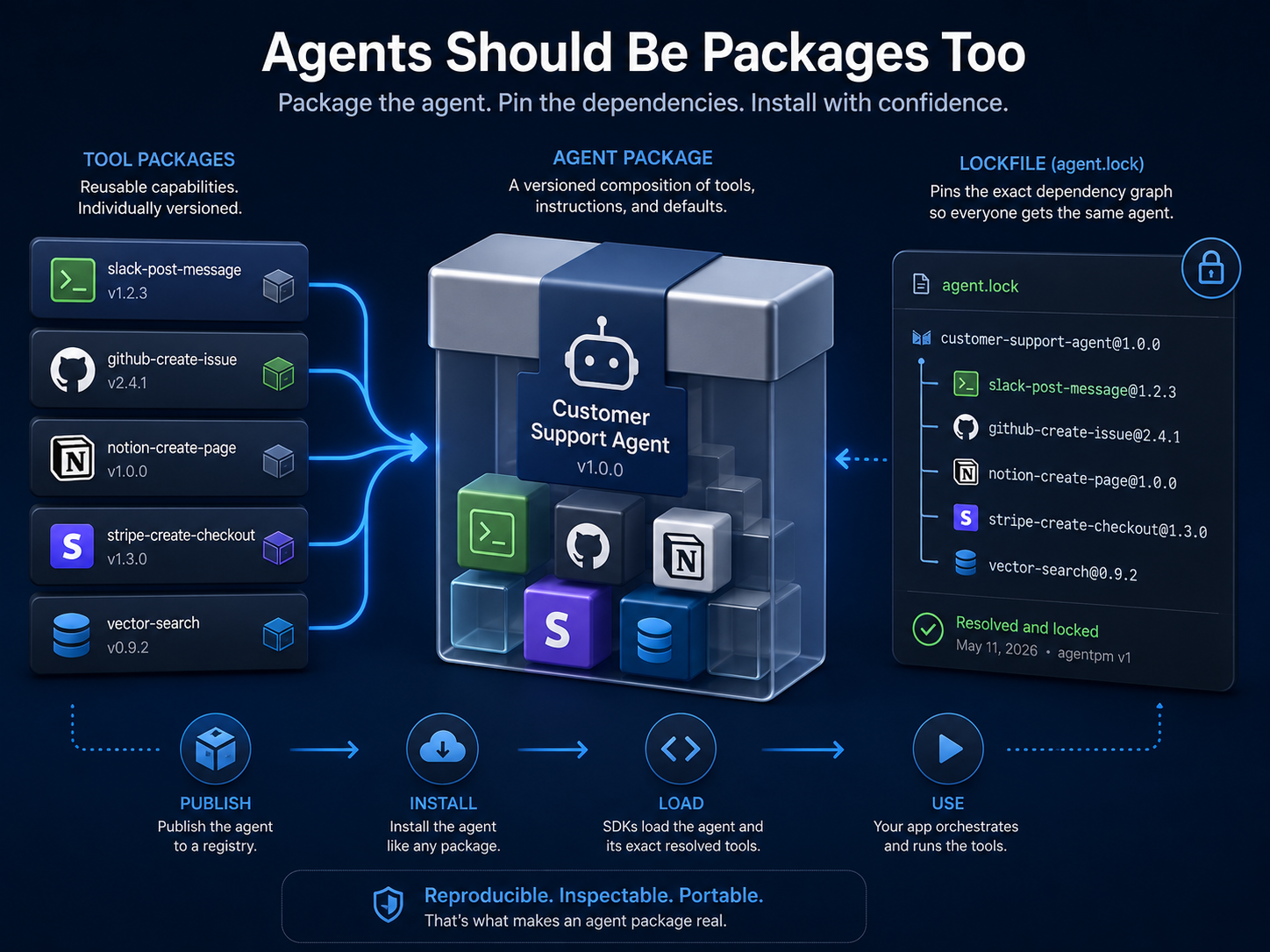
The hard part of agent development is not getting an LLM to call a tool once. The hard part starts when that tool needs to be reused, versioned, installed, trusted, and run somewhere else.

Most agent ecosystems have plenty of demos and very few genuinely reusable building blocks. Seeding AgentPM starts with a small set of tools that people should actually want to install.